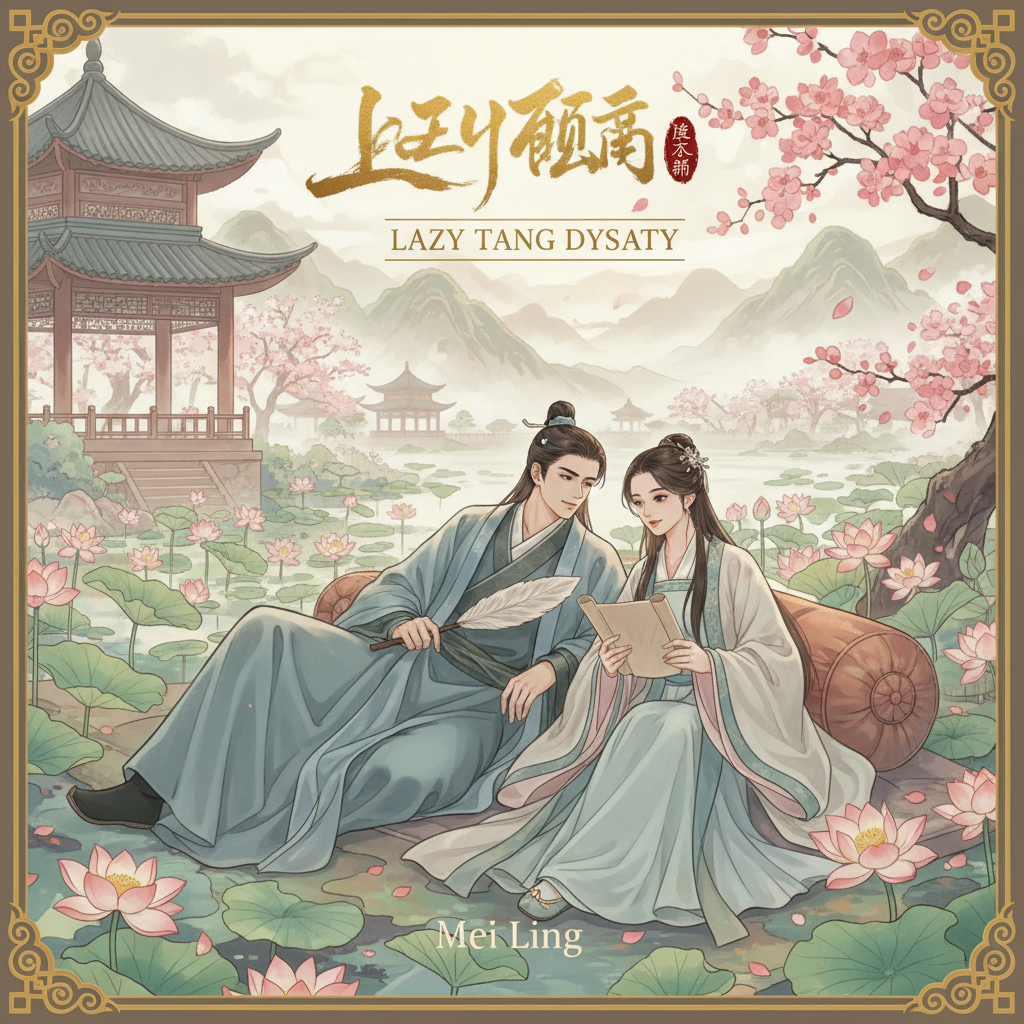
Lazy Tang Dynasty
Yun Hao unexpectedly found himself transported to the Tang Dynasty. Having lived two lives, all Yun Hao wanted was to idle away his days in blissful indolence. However, Li Yuan had no intention of let
Yanmen Mountain lies at the border between Baishui and Yijun, the road passing through Pu, Baishui, Yijun, and extending all the way to Huangling County. With an elevation of over a thousand meters, legend has it that its name derives from a divine wild goose that once alighted upon its heights. Today, most people know of Yanmen Pass, yet few have heard of Yanmen Mountain, when in truth the pass is named for the mountain. The name of Yanmen Mountain dates back to ancient times; even in the “Classic of Mountains and Seas,” in the section “Western Classic within the Seas,” it is written: “Yanmen Mountain, where wild geese pass through. It lies north of Gaoliu. Gaoliu is north of Dai.”
In the twelfth year of the Daye era, spring found the Yun family manor nestled at the foot of Yanmen Mountain. A hemp pole bore a spirit banner; white paper money fluttered upon the wind, scattering through the air. From the great house came the deafening weeping of mourners, many kneeling or seated before a corpse, wailing their grief. Yet, upon closer inspection, some faces were truly marked by sorrow, their tears streaming freely, while others showed not a drop—crying aloud without tears, belying their sincerity. The truth or pretense of their mourning was written plainly on each face.
Yun Hao could hear the mournful strains of the suona, but his eyes would not open. His mouth and nose felt useless; his entire body lay stiff within the coffin, like a corpse. Only after the official inquest would his coffin be sealed and interment proceed. Though speech was impossible, a voice s